10 ways to use vintage ticking fabric at home
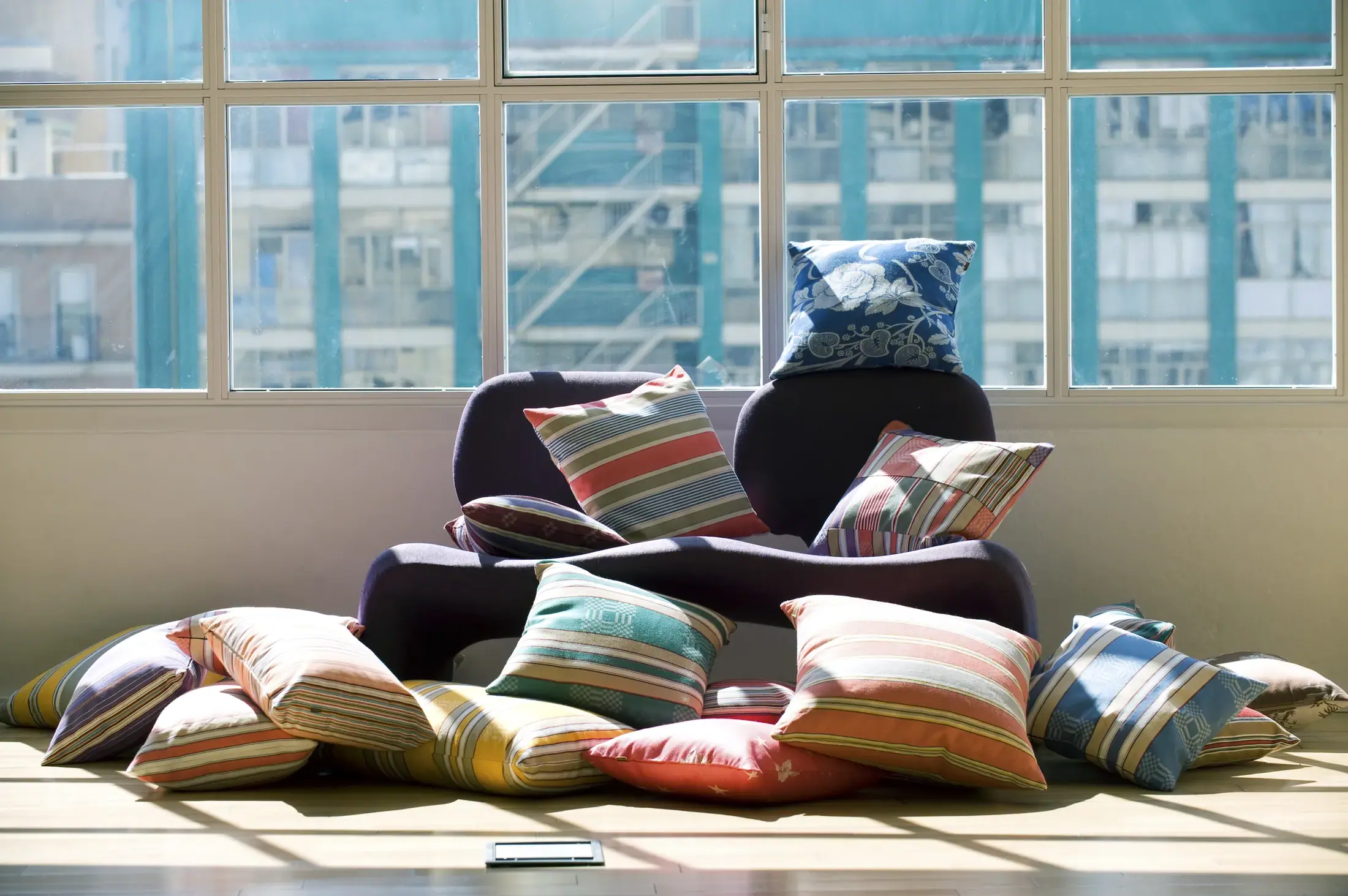
Ten ways to use vintage ticking at home, from a single cushion to a full chair – with how much fabric each one usually takes.
Cushion covers
The easiest start. About 0.6 yard per 50 × 50 cm cover. Mix a stripe with a floral jacquard in the same colour for a pair that matches without being identical. Yardage chart.
Lumbar pillows
Long, narrow cushions show off horizontal stripes. Around 0.5–0.7 yard each.
Chair seat pads
Dense ticking is made for wear. A dining chair seat usually needs about 0.5 yard, more if you want ties or a boxed edge.
Upholstered headboard
A single block of strong stripes behind a bed. For a double headboard, plan on 2–3 yards depending on the fabric width and how you run the stripes.
Café curtains
Half-height curtains for a kitchen or bathroom window. Measure the width and double it for fullness.
Table runner
A strip of ticking down a wooden table is simple and looks deliberate. A 2 m table needs a little over 2 yards of length; one bolt width gives you two or three runners.
Bench cushion
For a window seat or a garden bench. Stripes along the length make a long bench look even longer.
Apron or tea towels
Ticking was a working cloth, so it suits working textiles. One yard makes a full apron.
Tote bag
Strong enough for market shopping. About 0.75 yard with straps.
Dog bed cover
Hard-wearing and washable; a medium bed takes 1.5–2 yards.
Working with vintage cloth
Wash it gently before cutting, because old cotton can shrink a little the first time. Plan where the stripes fall before you cut, and if a piece has a fold line or a small mark, place it on the back or inside a seam.
Need a large amount of one fabric for a project? Several of our bolts still hold 20 yards or more. Ask us · See the fabrics →