What is ticking fabric?
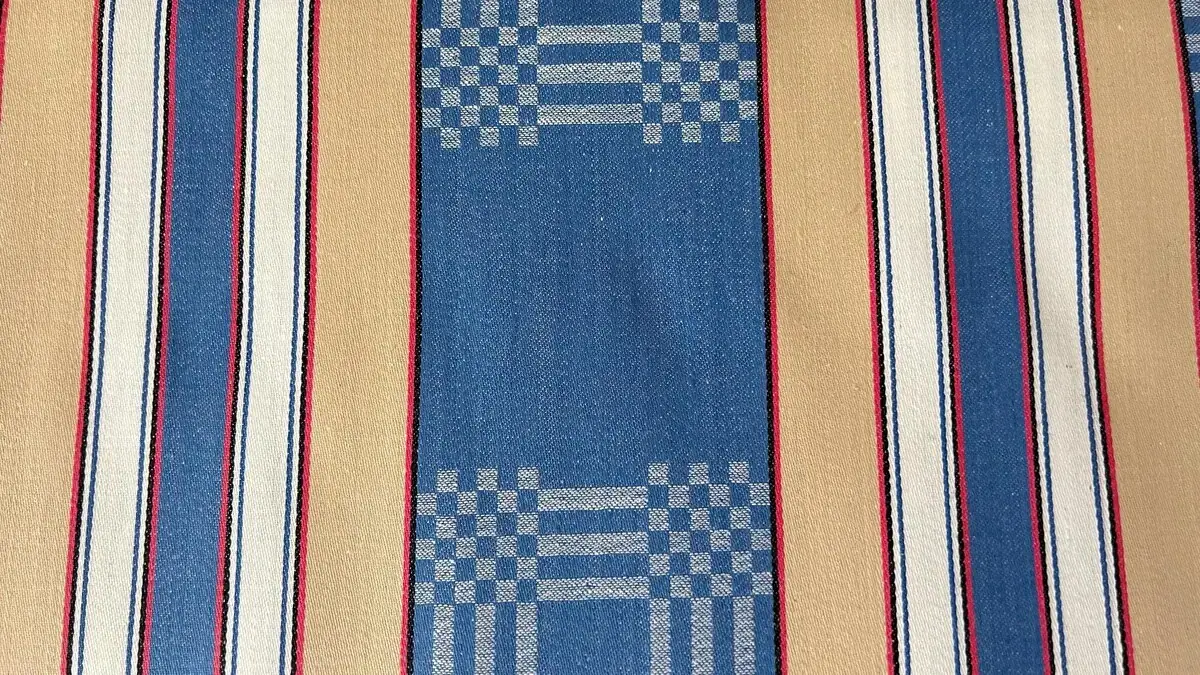
Ticking is the striped, tightly woven cloth that once covered mattresses and pillows. Here is what makes it different from other striped fabrics, and what it is good for today.
A cloth made to hold feathers in
Ticking was first made as a covering for mattresses and pillows filled with feathers, straw or wool. The weave had to be dense enough that feather quills could not work their way through, so ticking is woven tightly, usually in cotton or linen, and often in a twill or herringbone structure that you can see if you look closely at the cloth.
That job explains almost everything about it: it is heavy for its weight, it does not stretch, it wears slowly and it softens with washing instead of falling apart.
Woven stripes, not printed ones
The stripes on traditional ticking are woven in: the coloured threads run the full length of the cloth, so the pattern is the same on both sides and does not fade off the surface the way a print can. Classic ticking is narrow stripes on an off-white or natural ground, but Spanish and southern European mills also wove much bolder versions, with wide bands of colour and small jacquard motifs set between the stripes.
What ticking is used for today
- Cushions and pillow covers – the most common use; the stripes give a clean, structured look.
- Upholstery – chair seats, benches, headboards and small sofas. Its density makes it hard-wearing.
- Curtains and café curtains – it hangs straight and the stripes read well vertically.
- Table linen and kitchen textiles – runners, aprons, tea towels.
- Bags and small goods – tote bags, pouches and dog beds.
Vintage ticking vs new ticking
New ticking is easy to find, but much of it is printed, wider and lighter. Vintage deadstock ticking – cloth that was woven decades ago and stored on the bolt without being used – tends to be denser, with woven stripes and colour combinations that are no longer made. We explain how to tell them apart in this guide.
Caring for ticking
Most cotton ticking can be washed gently at 30 °C. Vintage cloth may shrink a little the first time, so wash it before cutting if the size matters, and dry it flat or on a line rather than in a hot dryer.
Our archive holds Spanish ticking woven in the 1940s and never used. See every fabric →