Vintage vs reproduction ticking: how to tell the difference
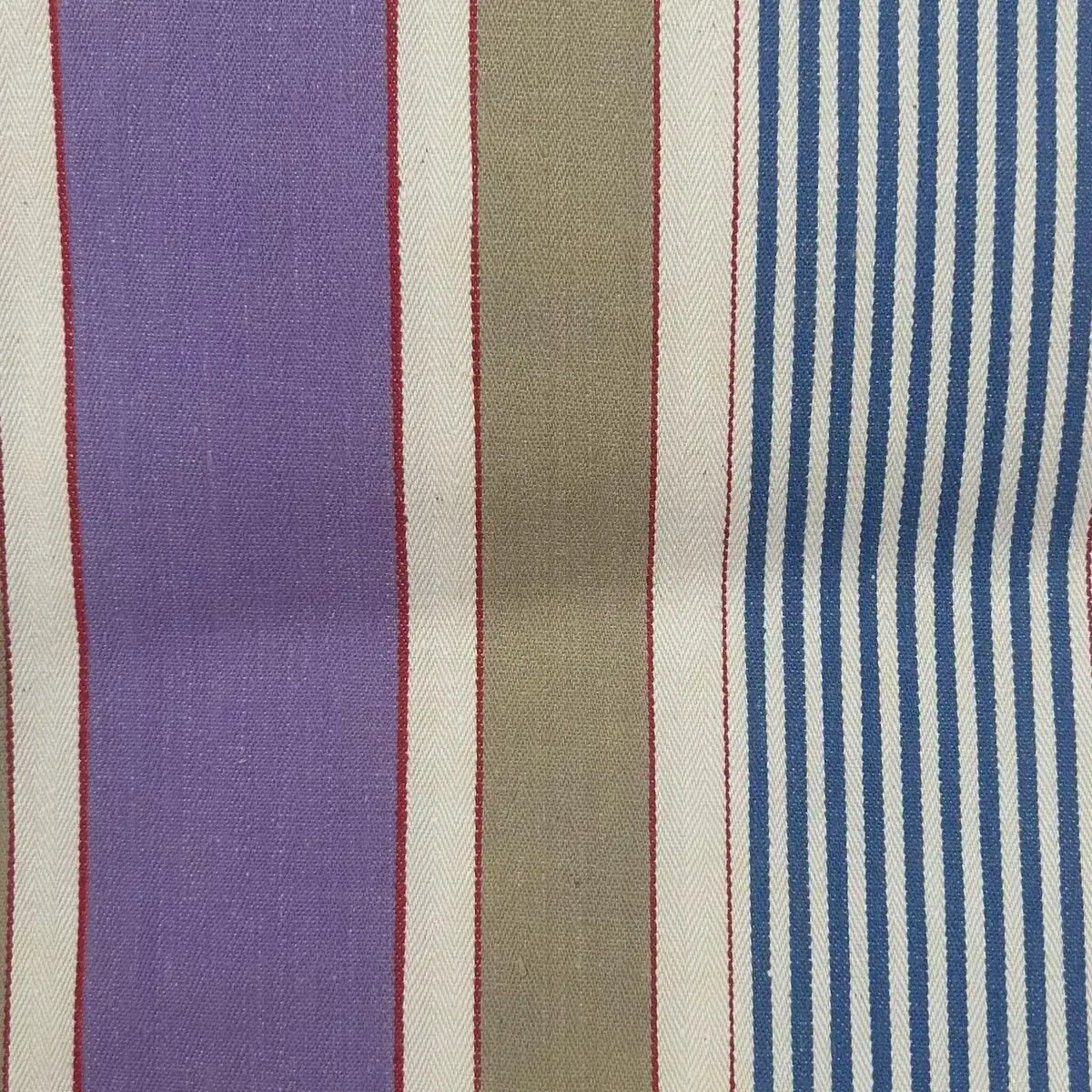
Not all "vintage-look" ticking is vintage. These are the signs we look for when we judge a striped cloth – useful whether you buy from us or anywhere else.
1. Are the stripes woven or printed?
Turn the fabric over. On woven ticking the stripes look the same, or almost the same, on both sides, because the coloured threads run through the cloth. On printed ticking the back is pale or blurred. Old ticking is almost always woven; many modern "ticking-style" fabrics are printed.
2. The width of the bolt
Older looms often produced narrower cloth. Vintage ticking commonly comes in widths from about 70 to 140 cm, while much new furnishing fabric is a standard 140–150 cm. Width alone does not prove anything, but an unusual width is a good sign.
3. Weight and hand
Ticking made for mattresses is dense and firm, sometimes a little stiff when it has been stored for years. Lightweight, soft, thin striped cotton is more likely to be a modern dress or quilting fabric.
4. Small irregularities
Old cloth often has slubs, slight variations in stripe width and selvedges that are not perfectly straight. Perfect uniformity across many metres usually points to recent production.
5. Storage marks
Deadstock that has waited decades on the bolt can show fold lines or small marks along the outer layer. A good seller photographs these and tells you about them. We list them on every listing and send extra photos on request.
6. Colour combinations
Many mid-century Spanish tickings combine colours you rarely see in new cloth: burgundy with lilac, mustard with blue, olive with brick red, often with small woven motifs between the stripes. These palettes are hard to reproduce exactly.
Deadstock vs used vintage
"Vintage" can mean cloth that has been used – an old mattress cover, for example – or deadstock, which was woven, stored and never cut. Deadstock gives you the age and character of old cloth without wear, stains or old seams.
Everything in our archive is deadstock from old Spanish stock. See the fabrics →